Strongsville Community Theatre
The Strongsville Community Theatre is performing Arsenic and Old Lace, a dark comedy about an eccentric family hiding a series of outrageous secrets—including a pair of seemingly-sweet murderous elderly aunts, this weekend and next at the Strongsville High School Little Theatre. More information and tickets available on their website at: https://www.strongsvillecommunitytheatre.com/next-show
Community Band
The Strongsville Community Band will be playing a free concert March 1st at 3pm in the Middle School Auditorium with a range of music including Grainger's Irish Tune from County Derry, Westside Story, and Vivaldi's Double Concerto.
The Jazz Swing Band will be playing March 15th to support the Alzheimer's Association, with a health fair at 2pm, Concert at 3.
Optimist Club
The Optimist Club of Strongsville is holding their reverse raffle on March 7. If you wish to attend you can get tickets at: https://www.zeffy.com/en-US/ticketing/2026-strongsville-optimist-reverse-raffle
Dr. Michael Deucher – Cardiology Update at Southwest General
Last Friday, we heard from Dr. Michael Deucher, cardiologist at Southwest General Health Center, who shared an informative and practical update on several important advances in cardiology.
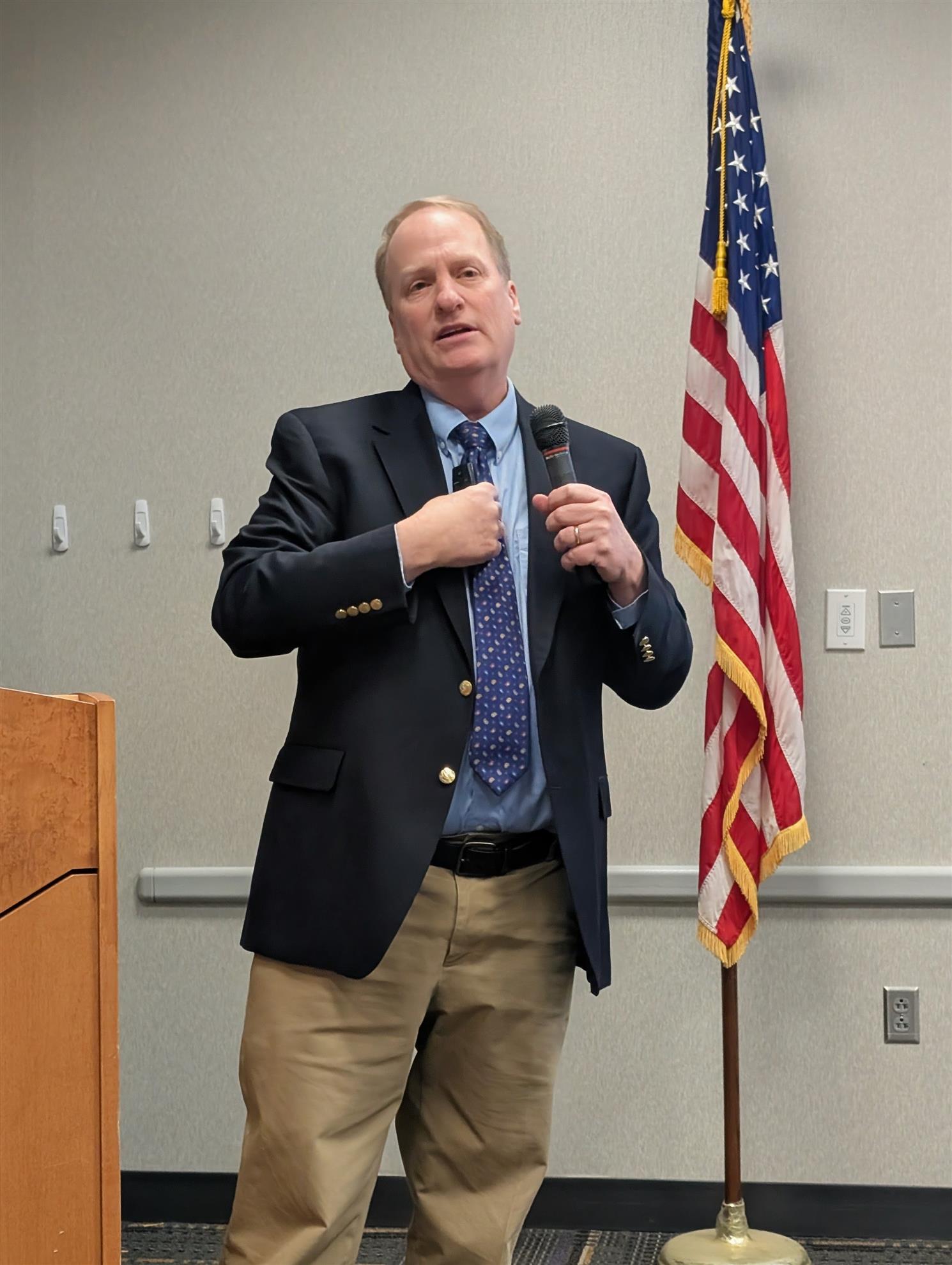 Dr. Deucher grew up locally and has been a member of the Southwest General medical staff since 2001. In addition to caring for patients, he has served as Past President of the Medical Staff and on multiple governing boards, including the Health Foundation Board, supporting fundraising efforts for the hospital.
He focused his remarks on three major topics:
1. Coronary Calcium Score
- Dr. Deucher emphasized the value of the coronary calcium score as a screening tool for heart disease risk.
A quick, non-invasive CT scan (no IV required) - Takes about three minutes
- Measures calcium buildup in the coronary arteries
- Helps estimate heart attack risk over the next 3–10 years
A score of 0 suggests very low risk. Scores above 400 may warrant further testing, such as a stress test.
He noted that thanks to a grant through the Southwest General Foundation, the test is currently available at no cost with a provider’s order. Usage has increased dramatically—from about 250 tests annually to over 2,500 last year—reflecting growing awareness.
Dr. Deucher generally recommends considering the test beginning around age 40, particularly for individuals with risk factors such as family history, smoking, diabetes, or high blood pressure.
2. TAVR (Transcatheter Aortic Valve Replacement)
One of the most significant advances in his career has been TAVR, a minimally invasive procedure to replace a narrowed or calcified aortic valve.
Instead of open-heart surgery, physicians:
- Access the heart through an artery in the leg
- Deliver a new valve via catheter
- Implant it within the existing valve
The procedure typically takes about 45 minutes, and many patients go home the next day—compared to 5–10 days or longer for traditional surgery.
Southwest General was the first community hospital in the Cleveland area to offer this procedure, and it has become a transformative option, especially for elderly patients who might not tolerate open-heart surgery well.
3. The Watchman Procedure for Atrial Fibrillation
Dr. Deucher also addressed atrial fibrillation (AFib), a common condition that increases stroke risk due to clot formation in the heart.
For patients who cannot tolerate long-term blood thinners, the Watchman device offers an alternative:
- A small implant is placed in the left atrial appendage
- This seals off the area where clots commonly form
- Reduces stroke risk without lifelong anticoagulation
With AFib affecting roughly 20% of people by age 80, this represents an important option for many patients.
Discussion Highlights
Members asked questions about:
- The relationship between cholesterol levels and calcium scores
- Diet trends (Mediterranean, South Beach, paleo, carnivore) and long-term heart health
- Whether calcium buildup can be reversed (it generally cannot, though progression can be slowed)
- Appropriate screening intervals (typically 8–10 years if the initial score is zero)
Dr. Deucher stressed that while diet and lifestyle play major roles, heart disease risk is multifactorial. He encouraged evidence-based approaches and ongoing conversations with healthcare providers.

 Brian Krusz's table won the drawing 2 weeks ago. There are 51 cards left in the deck, and the queen is worth $22.


